
Turning side streams into high value ingredients: Dapibuset
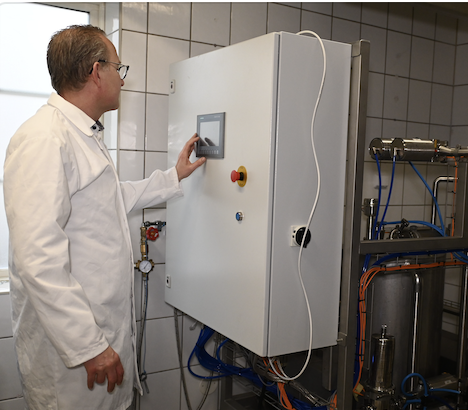
Micael Simonsson and Lidia Garcia Pou founded Dapibuset to support producers turn their side streams into high value ingredients – right where the waste is created.
“We firmly believe that side streams, be they from agriculture or the food and drinks industry, can be turned into new products; thus creating circular food systems that reduce waste and create local value,” says Micael Simonsson, Chief Technology Officer and founder of Dapibuset.

Dapibuset is developing a modular biomanufacturing system that consists of bioreactors that can be installed on site – for example at a farm, a mill or a brewery. Using a microbial process called solid state fermentation, side streams such as wheat chaff and stalks, spent grain or okara are combined with selected microorganisms to create more nutrient-rich ingredients.
The decentralized approach is an important part of the concept. Many agricultural and food industry side streams are bulky, wet and highly perishable making them expensive to transport and difficult to utilise before they lose nutritional value. By processing them directly where they are generated, Dapibuset can reduce transport costs and emissions while enhancing the nutritional value in the final ingredient.
“The ingredient can be used across a broad range of food and feed applications. Its amino acid profile and functional properties make it highly versatile for different formulations and product categories.”
Creating revenue while reducing waste and supporting self-sufficiency
Micael Simonsson emphasises how their bioreactors can help create important revenue streams for producers, at the same time as they reduce waste and support self-sufficiency. Brewers, for example, can take care of their own spent grain rather than paying for its removal, thereby transforming a low-value side stream into a nutrient rich ingredient.
“We wanted to create something with immediate value for food and drinks producers. If they see what they can gain from using biotechnology, they will be more likely to adopt it.”
Scaling up its bioreactor platform in 2026
Dapibuset’s pilot plant is up and running since 2025. By the end of 2026, the company plans to scale up its bioreactor platform and begin commercial deployment with customers.
“As we expand the platform, we want potential customers to already begin exploring how the technology can fit into their operations through our pilot plant” says Micael Simonsson.
In the Dapibuset team, they also have a chef that is continuously developing recipes using the ingredients created through their biomanufacturing system.
“Fermented foods need to taste good if we want to create a new biotech food sector. Otherwise, consumers will only buy them once. Having a chef on board means that we can experiment with texture and taste to create foods that people genuinely want to eat.”
So far, the team has developed products including cinnamon buns, biscuits, pasta, crackers, spreadable, patties and falafel – all from residues from wheat harvesting, such as chaff and stalks.
While the ingredients bring their own unique texture and flavour characteristics, the results demonstrate the broad application potential of these ingredients across different categories.
Together with Solina, Dapibuset has also developed hybrid meatballs in which part of the meat content was replaced with its fermented ingredients while maintaining taste and texture. According to the team, the results demonstrate how the technology could help reduce the environmental footprint of food products without compromising consumer experience.
Collaboration along the whole value chain is needed
“We see strong potential in using fermentation to upgrade underutilised side streams into ingredients with improved nutritional value and functionality; that creates opportunities for more sustainable food and feed products without relying on new raw materials,” says Micael Simonsson.
Micael Simonsson used to work for Tetra Pak for nearly three decades. In that role, he was part of initiating what was to become Biotech Heights. He is very proud to see the development of the hub – and sees Dapibuset’s membership as crucial to support innovation in the biotechnology sector.
“Scaling new food technologies requires collaboration across the entire value chain. Through Biotech Heights, we can connect expertise from food production, process technology and biotechnology to help move innovation faster.”
According to Micael Simonsson, strong industry networks are essential for building competitive and resilient food systems.
“I believe the future of sustainable food need collaborations and I really see the benefit of working together: being part of a network, contributing, but getting something out of it too!”


Join us in unlocking the potential of biotechnology.
We are looking forward to new partnerships.
Connect with us to collaborate.

Subscribe to our newsletter
Get the latest updates, news and events from Biotech Heights.
We issue the newsletter 5-7 times a year.