
Ironic Biotech: using precision fermentation to develop bioavailable, non-animal iron compounds
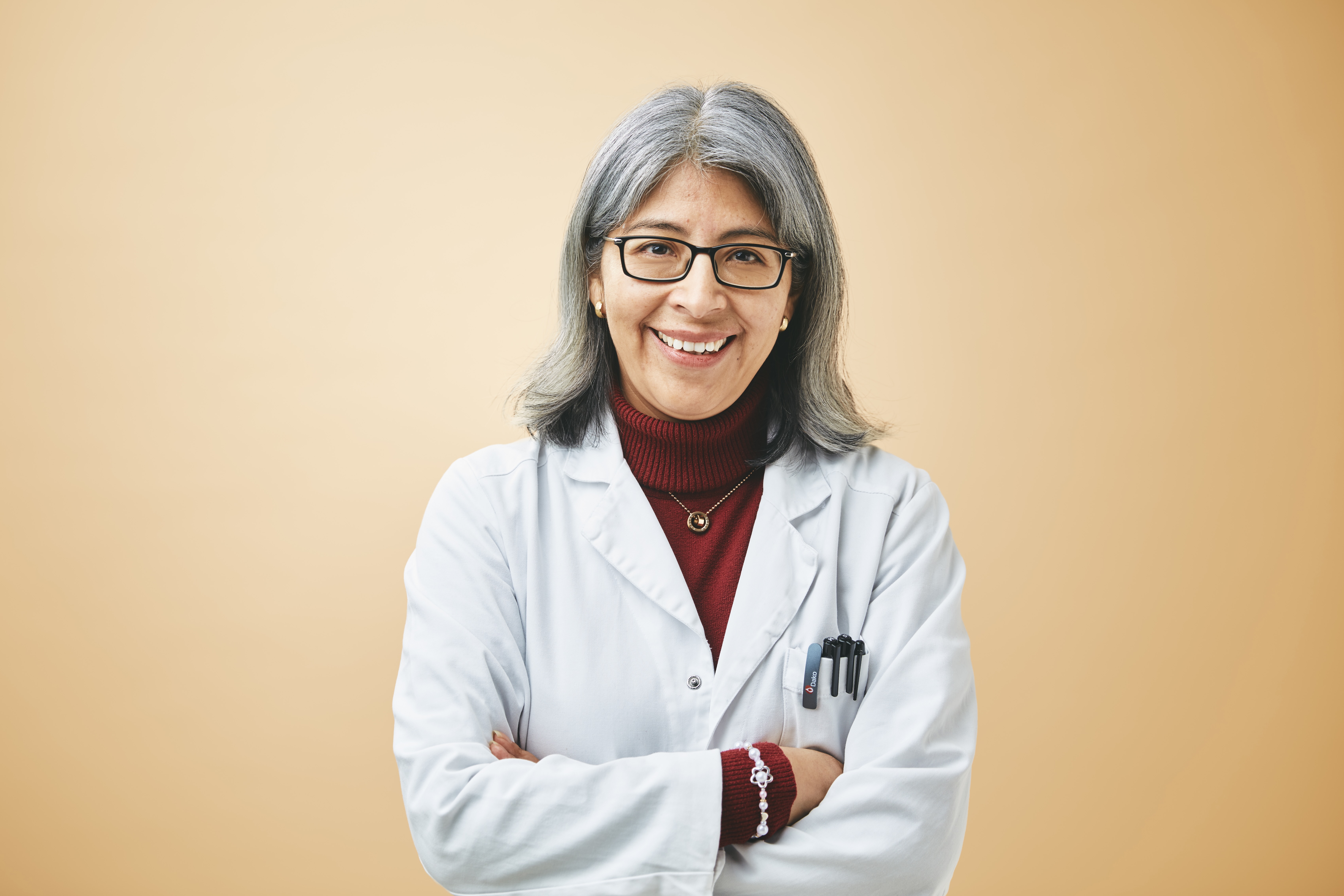
Nélida Leiva Eriksson is the founder and CEO of Ironic Biotech; a company developing bioavailable, non-animal iron compounds with the help of precision fermentation. She was motivated to start the company as she herself had suffered severe anaemia.
"I founded Ironic Biotech to put an end to the tiredness and fatigue caused by iron deficiency, which affects women, girls, the elderly and many vegans and vegetarians. I wanted to develop an alternative to traditional iron supplements that often cause stomach pain and bloating."
Compound with organic iron
In contrast to many current iron supplements, which contains poorly absorbed inorganic iron (and causes discomfort), the iron compound Ironic Biotech is developing contains organic iron. This iron mimics the heme-iron found in meat and blood and is easier for the body to absorb as it is bound in a protein structure – which means it can be readily absorbed by the body. Inorganic iron, on the other hand, is absorbed via alternative, less effective mechanisms, resulting in poor absorption – that is also why current iron supplements contain at least 15 times more iron than the body actually needs.
And while heme-iron found in meat is a good source of iron, some of the iron is released already in the mouth, hence the flavour of meat, without being absorbed by the body. This unabsorbed iron instead accumulates in the colon and excessive consumption of meat can increase the risk of developing colon cancer.
"Our non-animal heme-iron is not released at the same rate as the heme-iron in meat since the protein is different: it doesn’t have the strong flavour of meat’s heme-iron either. That means that our compound can be consumed by itself, or we can also add it to foods like juice, dairy and bread," says Nélida Leiva Eriksson, who is also a senior lecturer at the Department of Process and Life Science Engineering at Lund University.
The non-animal iron compound that Ironic Biotech is developing has the same bioavailability as animal-based heme-iron. It is also more stable as it can withstand both room- and higher temperatures and has a low oxidation rate – which means that it is healthier and safer than animal-based iron.
Where are they now in the development process?
"Our technology for producing the compound is ready. We have our first generation of premium iron proteins which we are now formulating to create our commercial products," says Nélida Leiva Eriksson.
"There are lots of options; we are testing both liquid and powder formats; we aim to use ingredients that have already been approved as safe for use in the food and supplement industry."
Simultaneously, Nélida Leiva Eriksson and her team are also preparing to scale up their compound production to a hundred litres to be able to run the necessary tests to provide documentation for the US and EU food and drug authorities, the Food and Drug Administration (FDA) and the European Food Safety Authority (EFSA). This applies to all products made using genetically modified organisms and precision fermentation, even if the final product is the same as their natural version, as is the case of the iron proteins from Ironic Biotech.
In the EU, however, the evaluation process is very slow and takes several more years compared to the US. This lengthy process has become a serious barrier to getting new biotech food products out on the market emphasises Nélida Leiva Eriksson. It is hard for companies to fund the extensive review process which means that many start-ups give up or change direction.
At the same time, there is limited investment and financial support for start-ups trying to take the leap into larger-scale production.
"We need more investors who can support start-ups during this middle phase, where you go from testing in small bioreactors to trying out your process in hundred litre reactors. Currently there are not enough accessible facilities or supports to do this, even though these tests are required for example by EFSA."
Membership in Biotech Heights can support the biotech industry
Nélida Leiva Eriksson sees Ironic Biotech’s membership in Biotech Heights as a way to support the biotechnology industry – for example by driving progress on regulative and investment issues. Being part of a hub can help put topics on the political and economic agenda and incentivise investments.
"First adopters, like Ironic Biotech, are very important to accelerate change. And within biotechnology, the opportunities are endless. Through Biotech Heights, we can highlight what’s needed for Europe to really capitalise on this market," says Nélida Leiva Eriksson.
She hopes that Biotech Heights will be able to provide support to cover gaps where many start-ups are lacking in knowledge, for example in fermentation and product formulation – knowledge which scientists who are part of the hub can provide. Another important area is to help start-ups consider scale up already in the early phase of their process development.
"When you go commercial you cannot use the same products as in the lab where the main focus is to create the best results. If you can start early to think of alternatives that are cost effective and can be used at large scale facilities you have an advantage."
She further hopes that, together, the companies in Biotech Heights can collaborate around reducing costs for the so-called downstream production steps – where you recover the proteins or substances created with different fermentation techniques. This involves filtering the liquid created during fermentation, separating the product, purifying it, and concentrating it, to create a pure ingredient. This processis expensive, and securing high yields can also be challenging.
"For our part, we know our protein very well. We can dare try different filters, growth media or techniques of separation, but some proteins cannot be treated so harshly. If we can work together, we can push innovation on how to improve the downstream recovery process."
Where does she think the field will be in the next 15 years?
"Food produced with biotechnology may take some time but the transition will happen. The production price is still too high to compete with conventional food production systems, for which we have established processes and infrastructure."
To change this, two things need to happen, according to Nélida Leiva Eriksson.
"We need to reduce the production costs associated with biotech foods; and reduce the time required to launch these new foods on the market. Food pricing structure should also be re-evaluated to be more realistic as today many food products are subsidised. For a fairer comparison, either biotech-produced foods should also receive subsidies, or subsidies should be removed. In any case, a thourough cost-benefit analysis is needed so everyone can access more nutritious and healthier food products."
Read more about Ironic Biotech


Join us in unlocking the potential of biotechnology.
We are looking forward to new partnerships.
Connect with us to collaborate.

Subscribe to our newsletter
Get the latest updates, news and events from Biotech Heights.
We issue the newsletter 5-7 times a year.