
Developing new uses for potato side streams: research portrait of Carl Grey
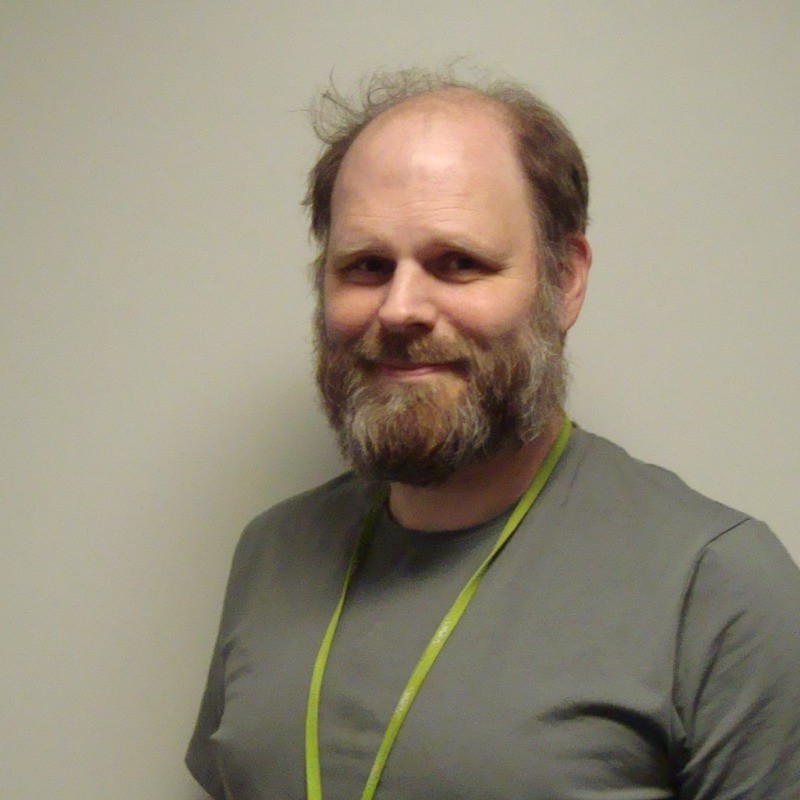
Carl Grey, Head of the Division of Biotechnology and Applied Microbiology at Lund University, sees Biotech Heights as an important forum for dialogue with industry.
“If we know what biotech industries need, then we can apply our knowledge to try and solve these challenges. As a researcher, it is very important to stay relevant.”
Carl Grey has been based at Lund University for almost three decades – first as a student, then as a PhD student, postdoc, and later researcher. Now he is a senior lecturer, and since 2025, head of the Division of Biotechnology and Applied Microbiology. He also spent a year at AstraZeneca, developing quality control methods for pharmaceuticals.
In recent years, he has focused on developing process solutions using enzymes to produce tailored lipids and fats with desired properties, as well as new plant-based foods from side streams of food, beverage, and agricultural production. Enzymes are specialized proteins that act as biological catalysts, speeding up chemical reactions. They can be used to solubilize carbohydrates, proteins, and lipids. The same enzymes can also be used to create new products by changing the reaction conditions.
“Our role is to demonstrate what is possible. By building better process solutions, we can make the enzymes work in the best possible way to transform different types of waste into new types of products.”
Another strand of research is focusing on creating polar lipids – a type of fat molecule - from similar side-streams. Polar lipids play an important role in brain and cognitive health and have anti-inflammatory properties. They add a creamy texture and can thus be used to enhance the flavour and texture of products made from, for example, oat pulp that today is thrown away.
“To create new and nutritious products, we need to first characterise the lipids using different techniques. By understanding their molecular function and structure, we can find out how to manipulate the polar lipids to behave the way we want in new types of foods.”
Transforming potato waste with solid-state fermentation techniques
Carl Grey is also leading a research project to develop new uses for side streams from potato production. Together with Biotech Heights, and the company Orkla, he will use solid-state fermentation techniques to transform unused potato waste by utilising a common fungal microorganism. This technique works by combining the potato waste and the fungi in a solid-state reactor to grow new and more nutritious microorganisms. These can then be used in new value-added products, such as plant-based foods that contain little or no meat.
“Since we are working with a substrate that you can eat, i.e. potato waste, we don’t need to separate the substrate from the new microorganisms that are produced. This makes the technique a very good fit for this project. It is also a relatively cheap technique which requires little energy, and almost no water, in comparison to for example precision fermentation.”
He explains that the project has a two-fold aim: the first is to explore what new types of products you can create from potato waste; the other is to assess how well solid-state fermentation techniques can support larger-scale production.
“It is exciting to work with a new side-stream! It will also be interesting to validate our process, and test out different ways to control humidity and aeration to ensure that the new microorganisms grow as we expect and want them to.”
Carl Grey would like to apply his year-long experience of method development within characterisation and quality control to the project. Since he started out as a researcher, he has been interested in the development of analytical models and techniques to improve processes and data collection.
“I like to improve how we do research: for example, develop new ways to understand enzymes better. If we know more about enzymes, we can increase the yield of the microorganisms that are created through solid-state fermentation techniques.”
Connecting with industry through Biotech Heights
Being part of Biotech Heights is a great way to showcase new possibilities to industry, with the potato waste hopefully turning into a successful example.
“People understand that we need to eat less meat for sustainability,” says Carl Grey. “If we can collaborate and utilise many different side-streams, we can come up with solutions that others can learn from. But the solution needs to have the right price, and the right taste! That is why we also need to test our ideas on a larger scale to have an impact on society!”
What excites Carl Grey the most in his day-to-day work is supervising his PhD students, postdocs and younger research colleagues.
“Working with all this talent really gets me going. It is very rewarding to follow their research and to take on new problems together.”


Join us in unlocking the potential of biotechnology.
We are looking forward to new partnerships.
Connect with us to collaborate.

Subscribe to our newsletter
Get the latest updates, news and events from Biotech Heights.
We issue the newsletter 5-7 times a year.