
Curve - developing systems to make biomanufacturing commercially scalable
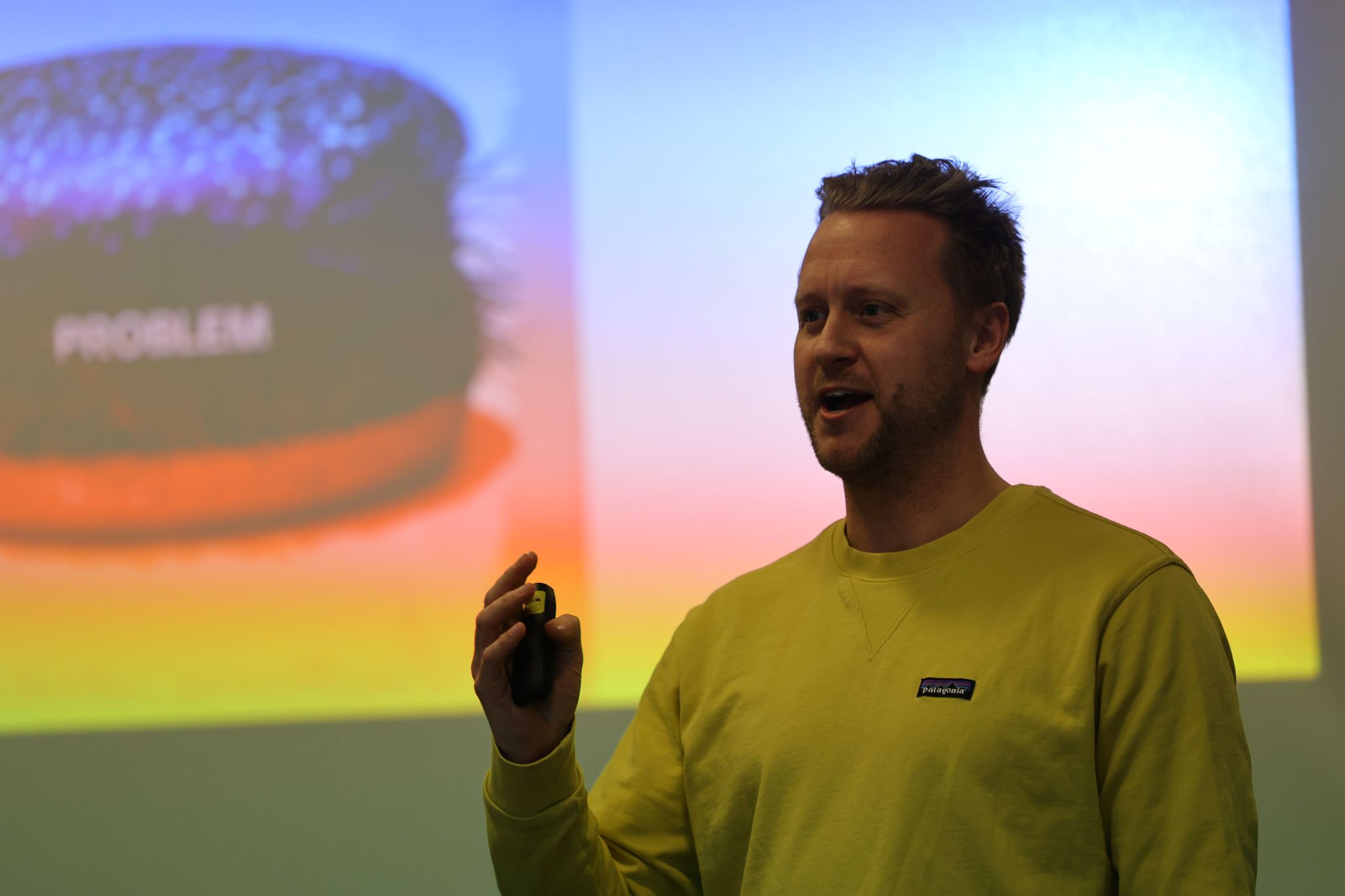
Jacob Schaldemose Peterson, co-founder & CEO of Curve, is excited about the future of biotechnology. The company has just undergone a direction change to fully focus on developing the systems needed to make biomanufacturing commercially scalable.
"From starting out focusing mainly on cultivated meat, we are now fully committed to develop food grade bioreactors and software systems that can help companies speed up the journey to industrial scale production," says Jacob Schaldemose Peterson.
He explains that they made this change based on the realisation that production processes are a key bottle neck for biotechnology; one that is seriously impacting the potential for a thriving biotech food sector. Instead of developing new optimised food grade bioreactors to cultivate cells (microbial, plant, animal) or enzymes to produce different fermented food products, many companies are still using pharma grade bioreactors, even though this equipment is not only more expensive, but also requires a very high level of safety; beyond what would be needed for food intended produce.
While it is understandable that companies that already have recourse to pharma grade equipment prefer to make use of that to test different growth media and how they support the growth, proliferation and maintenance of cells and microorganisms, this approach is holding the industry back, emphasises Jacob Schaldemose Peterson. It not only drives up production costs but also hinders new technological innovation.
"We need to make a big leap. The biotech food industry can only prosper if we encourage a radical transition to new ways of doing things."
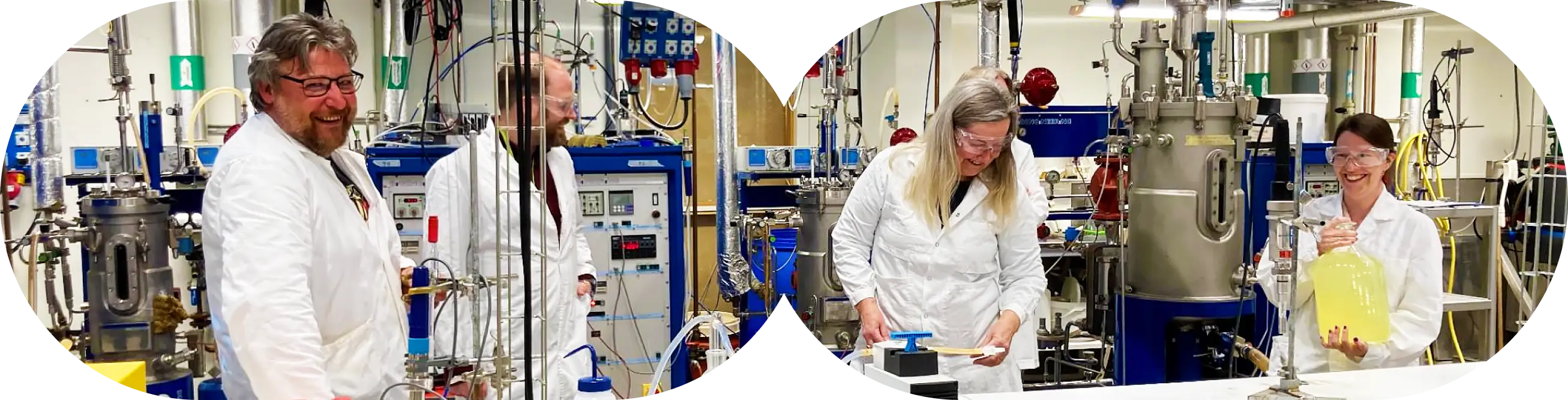
The business idea of Curve is to develop food grade bioreactors run on specially designed software which can optimise trials and scale ups. The software that is developed will be able to connect and draw learnings from multiple production sites in parallel.

"Up to now collecting data from biotech production has been quite challenging. As we deploy more systems, our models continuously improve. Over time this creates a growing process intelligence layer — a continuously learning representation of how different strains, media, and operating conditions behave across scales."
Jacob Schaldemose Peterson continues:
"It will also allow producers to collect valuable data from their own process, learn from it, and thus shorten the time it takes to produce commercially viable products."
Jacob Schaldemose Peterson reflects that the future of biotechnology for foods lies in different companies collaborating across the value and sector chains. Moving away from so called full stack companies, where you do everything yourself, to instead collaborating with specialised companies providing different expertise. Thus, Curve will invite partner companies to work with them, for example companies aiming to develop dairy proteins by scaling up different microbial yeast hosts.
"We do not aim to be an end producer. Our approach is to collaborate with companies who are experts on strains and media, bundling their processes with our hardware and software into market-ready offerings."
Curve is part of Biotech Heights to get access to infrastructure, expertise and competencies.
"It is great to have this platform to collaborate with other companies. My hope is that, in time, Biotech Heights will be able to attract more companies; with similar interests and that are facing similar challenges. Together we can create a movement across the value chain."
Jacob Schaldemose Peterson would especially like to see Biotech Heights being proactive in highlighting the possibilities afforded by infrastructures such as the Lund University Pre-Pilot Plant, and their own budding technology.
"Without the partners, our solutions are only hardware and software. Biotech Heights can play a part in putting Lund and Skåne on the map for biotechnology, and create a place where academia, industry and investors meet."
Why did Jacob fund first Re:meat, later rebranded into Curve?
"I wanted to make an impact for the climate. And food holds one of the largest keys for this. It is hard to change what we eat, so I wanted to focus on how we can produce the same foods that people have always loved but without the negative impact."
"I also got more and more convinced that we need radical innovation to make bold changes. That is what led me to the field of biotechnology, and to Curve, where we are trying to make this happen."
Next on the agenda for Curve is to initiate upscaling trials together with partners and customers within their BIOBRICTM – a standard for interchangable parts, developed with a view to building biological systems in living cells.



Join us in unlocking the potential of biotechnology.
We are looking forward to new partnerships.
Connect with us to collaborate.

Subscribe to our newsletter
Get the latest updates, news and events from Biotech Heights.
We issue the newsletter 5-7 times a year.