
Cultivated meat - how close are we?
Welcome to an event where we discuss the latest developments within the science of cultivated meat and opportunities and challenges for bringing new products to the market.

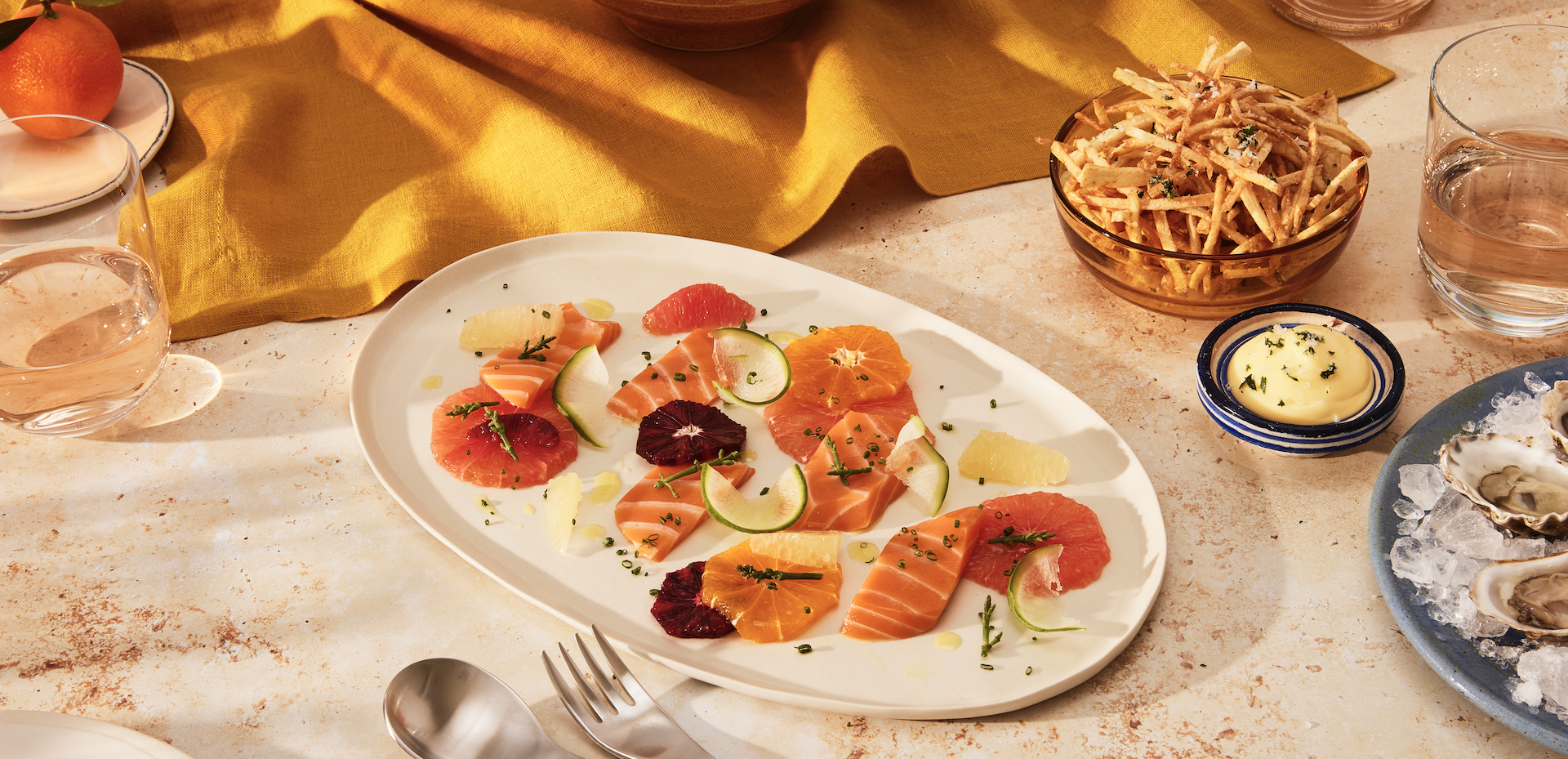
Image credit: The Good Food Institute, Wildtype cultivated seafood. CC BY 4.0. Provided by Arye Elfenbein.
For many of us, the idea of cultivated meat seems far away and at odds with our everyday food practices. But, as biotechnology advances, these new products could become a reality in the coming decades – more than a hundred companies worldwide are already making headway in developing foods from animal cells. Foods that will allow us to feed more people with fewer resources, while meeting an increasing demand for nutritious protein.
Our panel includes researcher Jette Feveile Young from Aarhus University; Letícia Heuko Pscheidt, Curve (rebranded from Re:meat); and Ismaël Bawah from the Good Food Institute.
They will present techniques for producing cultivated meat, discuss how companies like Curve can support production, and provide a global overview of the field, including developments in the EU, the US, and Asia.
The event is open to everyone interested in the topic, from technical and scientific perspectives to societal and behavioural change perspectives.
Programme
09.00 – Welcome and introduction to the topic, Emma Nordell, Biotech Heights and Tobias Linné, senior lecturer, Department of Communication, Lund University
09.15 – How do you produce cultivated meat: where are we now?, Jette Feveile Young from Aarhus University
09.30 – Biotechnology systems for large scale production, Letícia Heuko Pscheidt, Curve
09.45 – Global overview of the field of cultivated meat, Ismaël Bawah from the Good Food Institute
10.00 – Coffee
10.25 – Discussion: Challenges and opportunities for bringing new products to the market
11.00 - End
What is cultivated meat?
Cultivated meat (also known as cultured, cell-based, or lab-grown meat) is real animal protein produced directly from animal cells in a controlled, slaughter-free environment, bypassing traditional livestock farming. It offers a sustainable alternative with the potential to significantly reduce greenhouse gas emissions, land use, and water consumption. The process, which involves nurturing stem cells in bioreactors, aims to provide an identical, ethical, and efficient source of meat.